

Safe and Responsible Gaming
Your Wellbeing
Comes First
A comprehensive guide to maintaining healthy gaming habits, recognizing warning signs, and accessing professional support across Ireland.
Understanding Your Relationship with Play
Gaming participation triggers specific neurological responses. When you engage with digital entertainment platforms, your brain releases dopamine — the same chemical associated with other rewarding activities. This response is normal and expected. What matters is recognizing when anticipation of this response begins to drive behavior rather than the activity itself providing genuine enjoyment.
Poker players have a term for emotional decision-making: "the tilt." It describes that moment when frustration from a loss spills into the next hand, clouding judgment. But tilt extends beyond the card table. If you find yourself snapping at family members after a session, checking your phone compulsively during work, or feeling irritable when you cannot access your preferred platform, these are signals that your engagement pattern may benefit from adjustment.
"The goal is not to eliminate enjoyment — it is to ensure that gaming remains a choice you make freely, not a compulsion that makes choices for you."
Modern game design incorporates sophisticated engagement mechanics. Near-miss outcomes — where a result appears tantalizingly close to a win — create heightened arousal that encourages continued participation. Understanding that these mechanics exist allows you to approach gaming as informed entertainment rather than being swept along by designed psychological triggers. This awareness is your first protective layer.

The Physical Signals
Your body often signals over-engagement before your mind acknowledges it. Elevated heart rate when opening a gaming app, difficulty sleeping after evening sessions, or finding your hands trembling slightly during play — these physiological markers deserve attention. They indicate your nervous system is processing the activity as high-stakes stress rather than leisure.
Questions Worth Asking Yourself
Honest reflection requires no external validation. These questions are for you alone.
Has the time you spend on gaming platforms increased over the past six months?
Consider whether sessions have extended beyond your original intentions, or whether you find yourself logging in more frequently than before.
Have you concealed the extent of your gaming activity from family or friends?
Secrecy often indicates awareness that behavior has shifted beyond what you consider acceptable for yourself.
Do you experience irritability, restlessness, or low mood when unable to access gaming?
These withdrawal-like symptoms suggest psychological dependence that warrants professional guidance.
Have you attempted to reduce your gaming participation without success?
Failed self-imposed limits are a significant indicator that external support may be beneficial.
If you answered affirmatively to two or more questions, we encourage you to explore the resources listed below.
Building a Sustainable Budget Framework

Calculate First, Play Second
Your gaming budget should emerge from what remains after essential expenses — housing, food, utilities, savings, and family needs — are fully accounted. This discretionary amount represents your entertainment allocation. Within that, gaming competes with cinema visits, dining out, and other leisure activities. Assign it a specific portion, not the entirety.
Time Is Also a Currency
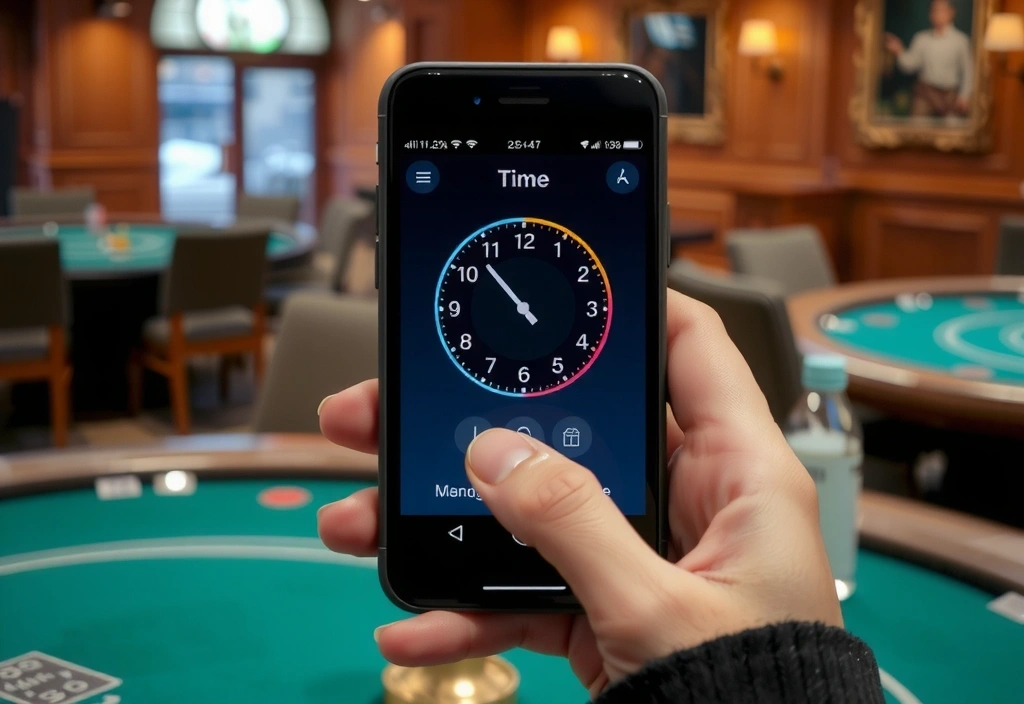
Financial limits address only one dimension. Consider establishing temporal boundaries: designated gaming hours that do not encroach on sleep, work, or family time. Many players find that late-night sessions are particularly susceptible to limit erosion. Setting a firm cutoff time — and using platform tools to enforce it — protects both your rest and your judgment.
Platform-Level Protection Tools
Licensed operators serving Irish players are required to offer protective mechanisms. These are not admissions of weakness — they are intelligent management strategies.
| Tool | Function | When to Use |
|---|---|---|
| Deposit Limits | Caps the amount you can deposit daily, weekly, or monthly | Proactively, before you feel pressure to exceed your budget |
| Reality Checks | Periodic on-screen reminders showing time elapsed and net position | During extended sessions to maintain temporal awareness |
| Cool-Off Period | Temporary account suspension ranging from 24 hours to several weeks | When you notice engagement patterns shifting toward compulsion |
| Self-Exclusion | Extended account closure, typically 6 months to 5 years, often irreversible | When professional advice suggests a significant break is necessary |
| Session Timer | Automatic logout after a predetermined duration | To enforce time boundaries without relying on willpower alone |
Tools are accessible within account settings on all licensed platforms. Contact customer support if you cannot locate them.
Common Misconceptions, Corrected
MYTH
"A hot streak means I should keep playing — I'm due for a big win."
REALITY
Each outcome is independent. Previous results have zero influence on future outcomes. This belief — the gambler's fallacy — drives more problematic behavior than nearly any other cognitive error.
MYTH
"I can win back my losses if I just play a little longer."
REALITY
Chasing losses almost invariably leads to deeper losses. The mathematics of probability ensure that extended play amplifies the house advantage. Accept losses as the cost of entertainment, not a debt to be recovered.
MYTH
"Setting limits means I have a problem."
REALITY
Setting limits means you are intelligent and proactive. Professional athletes use coaches, financial planners use budgets, and responsible players use platform tools. It is a sign of maturity, not weakness.

Healthy gaming coexists with — rather than replaces — meaningful social connections.
Irish Regulatory Protection
Irish gambling regulations exist specifically to protect consumers. Licensed operators must meet stringent requirements: segregated player funds, independent game testing, transparent terms, and mandatory contribution to responsible gaming initiatives. Offshore platforms operating without Irish licensing bypass these protections, leaving players without recourse if disputes arise.
When evaluating platforms, verify that they hold recognition from established regulatory bodies. This information appears in the footer of licensed sites. If you cannot locate licensing details, consider it a significant warning sign. The Gambling Commission and similar bodies maintain public registers where you can verify operator credentials independently.

Protecting Young People in Your Household
Gaming platforms are strictly 18+ environments. However, curious teenagers can be resourceful in circumventing age restrictions. Practical measures include:
- ✦ Enabling device-level content filters through your internet service provider
- ✦ Using shared family devices rather than private smartphones for younger household members
- ✦ Keeping payment cards and banking apps secured with separate PINs
- ✦ Having open, non-judgmental conversations about how online gaming mechanics work
Professional Support Directory
These organizations provide confidential, non-judgmental support for anyone concerned about their gaming behavior.
GambleAware
Free, confidential advice and support for anyone concerned about their gambling.
gambleaware.org →Gambling Therapy
Global support services including live advice and recovery resources.
gamblingtherapy.org →IMMEDIATE SUPPORT AVAILABLE
GamCare Helpline
Free, confidential support available 24 hours a day, 7 days a week.
0808 8020 133

Gaming Should Add to Life, Not Subtract from It
When gaming stops being a source of entertainment and becomes a source of stress, financial pressure, or relationship strain, something has shifted. Recognizing that shift is not a moral failing — it is an act of self-awareness that opens the door to change.
The resources listed on this page exist because millions of people have walked this path before you. Asking for help is not a sign of weakness. It is a sign that you value your wellbeing enough to prioritize it.
For information about licensed operators in Ireland, visit our home page. For questions about our responsible gaming policies, contact us directly.